Georges de Pellieux
An Officer and a SpyGeorges de Pellieux is a military general who appears at the Rennes retrial of Alfred Dreyfus among the senior officers following the case. The account gives him no extended speech or independent action; instead, his placement among the witnesses and his association with Auguste Mercier’s circle situate him within the military leadership surrounding the proceedings.
At the Rennes Retrial
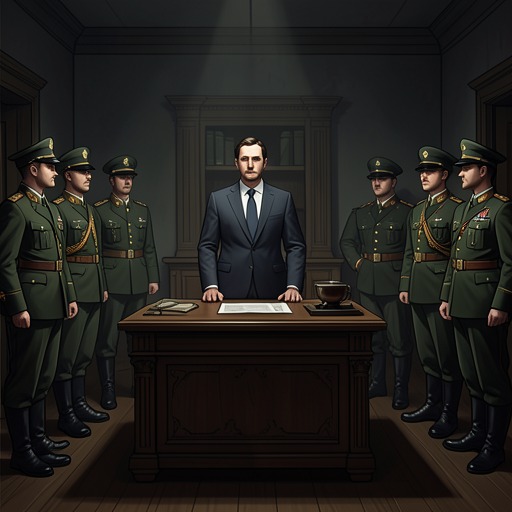
In the crowded Rennes courtroom, Georges de Pellieux is among the named figures in the central witness section, alongside Raoul le Mouton de Boisdeffre, Charles-Arthur Gonse, Jean-Baptiste Billot, Captain Lauth, and Felix Gribelin. The assembled men carefully avoid one another’s gaze. The detail makes their collective presence conspicuous while withholding any account of private exchange between them.
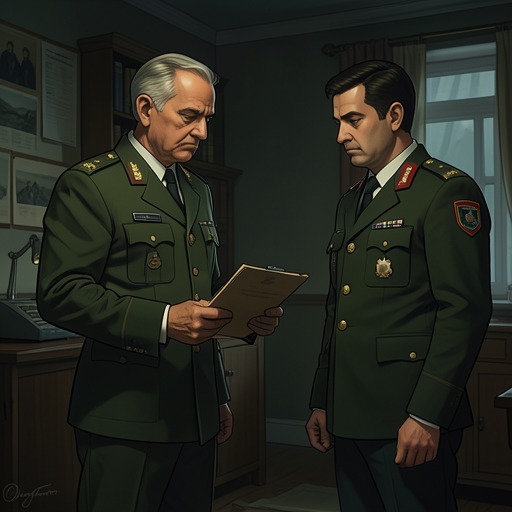
When Auguste Mercier enters and takes a seat between Charles-Arthur Gonse and Jean-Baptiste Billot, the generals begin a whispered conference. Georges de Pellieux has his back half turned. Auguste Mercier, though retired, is described as having resumed a dominant role in the army’s cause; Georges de Pellieux’s position in the scene places him among the officers gathered around that renewed leadership, but the account does not specify what he says or contributes to their discussion.
Association with Mercier’s Circle
Later, Georges Picquart tells Fernand Labori that Georges de Pellieux is among Auguste Mercier’s old comrades who have been to dinner at Mercier’s home, along with Raoul le Mouton de Boisdeffre, Charles-Arthur Gonse, and Jean-Baptiste Billot. Picquart says they are frequently in and out of the house. This recurring association links Georges de Pellieux to the group around Mercier during the trial, although the narrative supplies no details of the dinners or of Pellieux’s personal views.
Narrative Role
Georges de Pellieux is drawn through brief, observant details rather than a developed personal history: a place among the witnesses, a half-turned back during a whispered gathering, and inclusion in the circle visiting Mercier. Together, these appearances establish his proximity to the military establishment’s conduct of the case without attributing to him a specific decision, argument, or motive. His limited characterization also reflects the scene’s focus on the visible network of officers surrounding the proceedings, rather than on Pellieux as an individual actor.